
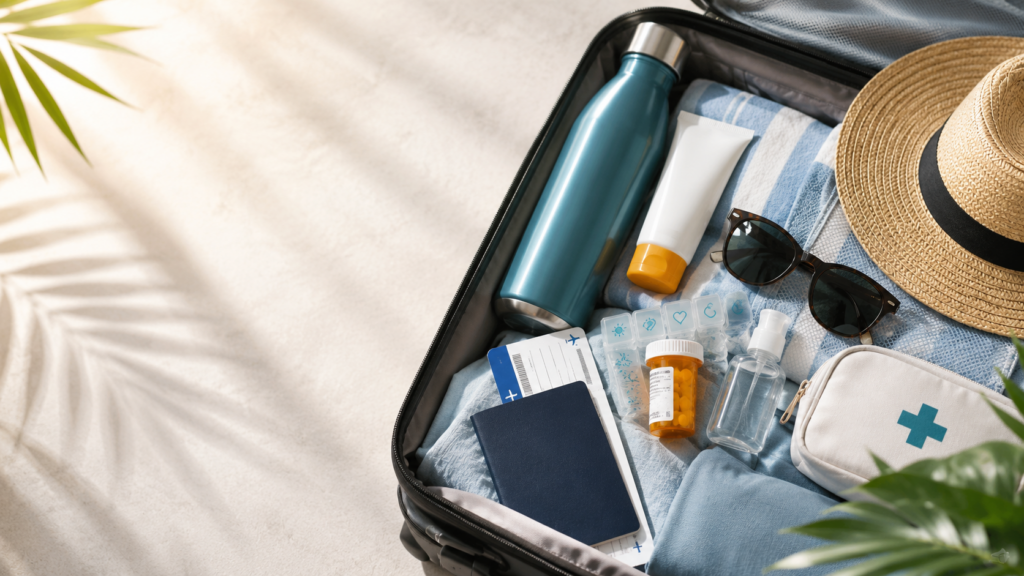
July is one of the busiest months for travel. Whether you are planning a family vacation, visiting loved ones, going on a cruise, or taking a quick weekend getaway, it is easy to focus on flights, hotels, outfits, and activities while forgetting one important thing: your health.
A little preparation before you leave can help prevent common travel issues like dehydration, stomach upset, sunburn, heat exhaustion, medication delays, and flare-ups of chronic conditions. Before your next trip, use this simple summer travel health checklist to help you feel your best from departure to return.
Schedule a Health Check Before You Travel
Before traveling, especially internationally or for an extended period, it is a good idea to check in with your healthcare provider. This is especially important if you have high blood pressure, diabetes, asthma, heart disease, allergies, mobility concerns, or any condition that requires daily medication.
A pre-travel visit can help you review your current medications, refill prescriptions, discuss any health risks based on your destination, and make sure you are up to date on routine vaccines. If you are traveling internationally, some destinations may require or recommend specific vaccines or preventive medications.
Even for domestic trips, a quick review of your health needs can give you peace of mind before you leave.
Pack a Smart Travel Health Kit
Your travel health kit does not have to be complicated. Start with the basics: prescription medications, over-the-counter pain relievers, allergy medication, antacids, bandages, hand sanitizer, sunscreen, insect repellent, and any medical devices or supplies you regularly use.
Keep medications in their original containers when possible, and pack them in your carry-on bag instead of checked luggage. This helps prevent missed doses if your suitcase is delayed or lost.
If you take daily medication, bring extra in case your trip is extended unexpectedly. It may also help to keep a list of your medications, dosages, allergies, and your doctor’s contact information with you.
Stay Hydrated in the Summer Heat
Hot weather, long walks, outdoor activities, alcohol, and air travel can all increase your risk of dehydration. Make water a priority throughout the day, not just when you feel thirsty.
A reusable water bottle can help you stay consistent. If you are sweating more than usual or spending a lot of time outdoors, you may also need to replace electrolytes. Watch for signs of dehydration such as headache, dizziness, dry mouth, fatigue, dark urine, or feeling lightheaded.
For older adults, children, and people with chronic medical conditions, hydration is especially important during summer travel.
Protect Yourself From Heat Illness
Summer travel often means more time outside, but high temperatures can affect your body quickly. Heat exhaustion can cause heavy sweating, weakness, dizziness, nausea, headache, or muscle cramps. Heat stroke is more serious and may include confusion, fainting, very high body temperature, or hot, dry skin.
To reduce your risk, plan outdoor activities earlier in the morning or later in the day when possible. Take breaks in shaded or air-conditioned areas, wear lightweight clothing, and avoid overexertion during the hottest hours.
If you start feeling overheated, stop what you are doing, move to a cooler place, drink water, and rest. Seek medical care right away if symptoms are severe or do not improve.
Be Mindful With Food and Water
Trying new foods is one of the joys of travel, but food and water safety matter, especially when visiting unfamiliar destinations. Wash your hands often, use hand sanitizer when soap and water are not available, and be cautious with food that has been sitting out in the heat.
If you are traveling somewhere with uncertain water safety, use bottled or properly treated water for drinking and brushing your teeth. Be careful with ice, raw foods, and undercooked meats or seafood.
Stomach illness can quickly interrupt a trip, so simple precautions can make a big difference.
Do Not Skip Sleep
Travel can disrupt your normal sleep routine. Late nights, early flights, time zone changes, and packed itineraries can leave your body feeling run down.
Try to keep a consistent sleep schedule when possible. Give yourself time to rest after long travel days, and avoid overpacking your itinerary. Sleep supports your immune system, energy, mood, and overall recovery.
If you are crossing time zones, sunlight exposure, hydration, and lighter meals can help your body adjust.
Move Around During Long Trips
Long car rides or flights can leave you stiff, tired, and uncomfortable. Try to move your body regularly during travel days. On flights, stand or walk when it is safe to do so. During road trips, schedule short stops to stretch your legs.
Simple movements like ankle circles, calf raises, shoulder rolls, and gentle stretching can help improve circulation and reduce stiffness.
For people with a history of blood clots, recent surgery, pregnancy, or certain medical conditions, it is especially important to ask a healthcare provider about safe travel precautions.
Listen to Your Body When You Return
Once you are back home, pay attention to how you feel. Fatigue after travel is common, but symptoms such as fever, persistent diarrhea, shortness of breath, rash, severe headache, unusual swelling, or worsening pain should not be ignored.
If you become sick after traveling, let your healthcare provider know where you went, when you returned, and what symptoms you are experiencing. This information can help guide the right evaluation and care.
A Healthy Trip Starts Before You Leave
Travel should be enjoyable, restorative, and memorable. By taking a few simple health precautions before and during your trip, you can lower your risk of preventable issues and focus more on enjoying your time away.
Before your next summer trip, take a few minutes to review your medications, pack a basic health kit, plan for hydration, protect yourself from heat, and check in with your doctor if needed.
If you have upcoming travel plans and want to make sure your health needs are covered, schedule an appointment with Dr. Reyes before you leave.